Diving into the world of aromatherapy is exciting, but if you want to apply essential oils to your skin, there’s one golden rule you can’t ignore: dilution. Essential oils are incredibly concentrated plant extracts. Think about this, it can take 35 pounds of lavender flowers to produce 15 mL of lavender essential oil. Using them straight from the bottle is a recipe for skin trouble.
Learning how to dilute essential oils for topical use is the most important safety step you can take. The process is simple: mix a few drops of your chosen essential oil into a larger amount of a neutral carrier oil or lotion. This protects your skin, helps the oils absorb better, and ensures you get all the benefits without the risks. This guide will break down the exact ratios and methods you need to blend like a pro.
Understanding the Tools: Dilution Charts and Calculators
What’s an Essential Oil Dilution Chart?
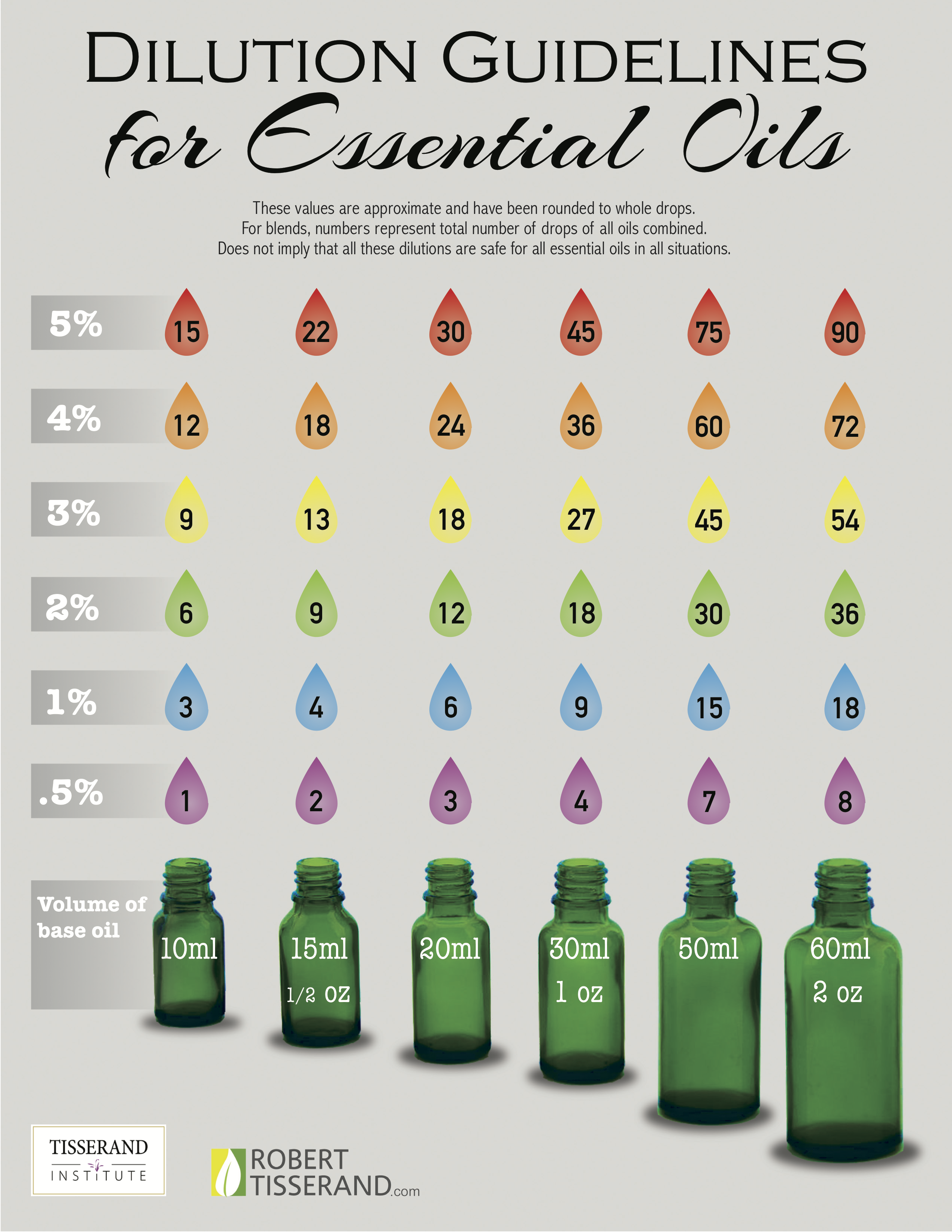
An essential oil dilution chart is your best friend for quick reference. It’s a guide that shows you safe dilution percentages for various situations. These charts take the guesswork out of blending by showing how many drops of essential oil you can safely add to a specific amount of a carrier, like a lotion or oil.
For most everyday applications on the skin, a dilution of 0.5% to 2% is recommended. This translates to about 3 to 12 drops of essential oil per 1 ounce (30 mL) of carrier oil. Charts often have different recommendations for the face versus the body, or for short term use versus daily use.
How Does an Essential Oil Dilution Calculator Work?
If you’re not a fan of manual math, an essential oil dilution calculator is a lifesaver. This digital tool lets you plug in the size of your container (say, a 10 mL roller bottle) and your desired strength (like 2%), and it spits out the exact number of drops you need to add.
These calculators work using a standard conversion: approximately 30 drops of essential oil equals 1 milliliter. So, for a 2% dilution in a 30 mL bottle, a calculator will tell you to add about 12 drops. Using a calculator ensures your blends are accurate and consistent every time.
Getting the Math Right: Ratios and Percentages
What is a Dilution Ratio?
A dilution ratio is just another way to express the concentration of an essential oil in your blend. You might see it written as a percentage (like 2%) or as a ratio (like 1:50). A 1% dilution, for instance, means the mixture is 1 part essential oil and 99 parts carrier oil, which is a 1:100 ratio. A 5% dilution is a 1:19 ratio. Understanding this helps you follow recipes and safety guidelines, no matter how they’re written.
How to Calculate Dilution Percentage Yourself
Want to figure out the math on your own? To calculate the dilution percentage, you divide the amount of essential oil by the total volume of your mixture, then multiply by 100.
An easier way for small batches is to use the 20 drops per 1 mL rule. For example, if you add 6 drops of essential oil to a 30 mL bottle of carrier oil, you can estimate your percentage. Since 6 drops is about 0.3 mL, your calculation would be (0.3 mL / 30 mL) * 100, which equals a 1% dilution. This simple math is key to knowing how to dilute essential oils for topical use safely.
Converting Drops to Volume
Sometimes recipes call for milliliters (mL) instead of drops. Knowing a few basic conversions is useful. As we mentioned, the most common approximation is 20 drops ≈ 1 mL.
From there, we can figure out other common measurements:
Keep in mind that thicker oils like myrrh might produce fewer drops per mL, while thinner citrus oils may produce slightly more. For most DIY projects, however, the 20 drops per mL guideline is perfectly fine.
Essential Oil Topical Dilution Guidelines
Now that you understand the basics, let’s get into the specifics of how to dilute essential oils for topical use for different needs. The right dilution depends on who is using the oil, where on the body it’s being applied, and for what purpose.
For Sensitive or Impaired Skin (0.2% to 1% Dilution)
When dealing with sensitive, damaged, or delicate skin (including the skin of children or the elderly), it’s crucial to use a very low concentration. The recommended range is between 0.2% and 1%. A 0.5% dilution, which is just 1 drop of essential oil in 10 mL (or 2 teaspoons) of carrier, is a great starting point. This gentle approach minimizes the risk of irritation while still delivering therapeutic benefits.
For Facial Cosmetics and Deodorants (0.5% to 1.2% Dilution)
The skin on your face and under your arms is thinner and more sensitive. For any products you apply to these areas, like face serums, creams, or DIY deodorants, stick to a dilution range of 0.5% to 1.2%. A 1% dilution (about 6 drops per 30 mL ounce) is a widely accepted maximum for daily facial products to prevent potential irritation.
For Body Oils and Lotions (1% to 3% Dilution)
For general, all over body applications like massage oils and daily lotions, a 1% to 3% dilution is considered safe and effective for adults. A 2% dilution is a fantastic standard for most body care products. This equals about 12 drops of essential oil per 30 mL (1 ounce) of carrier. This concentration is strong enough to be effective without being overwhelming for daily use. If you prefer a curated selection for massage and relaxation, explore the Balance and Harmony Gift Box.
For Bath Products (2% to 4% Dilution)
For products that get diluted further in water or are rinsed off, like bath oils or shower gels, you can use a slightly higher concentration, typically between 2% and 4%. Energizing options include Organic Eucalyptus Essential Oil. Because the product is washed off, the skin has less prolonged contact. However, it’s vital to mix your essential oils with a carrier oil or a solubilizer (like Epsom salts) before adding them to bathwater. Never drop them directly into the tub, as the undiluted oil can float and cause skin irritation.
For Acne Spot Treatments and Wound Healing (2% to 10% Dilution)
When you’re dealing with a very small, targeted area for a short period, a stronger blend can be beneficial. For things like an acne spot treatment or a minor cut, a dilution of 2% to 10% is sometimes used. For example, a 5% tea tree oil blend (try Organic Tea Tree Essential Oil) can be dabbed on a pimple. These higher concentrations should only be used on tiny spots and for a limited time.
For Pain Relief Rollerballs (3% to 10% Dilution)
Rollerballs designed for localized pain relief on temples, joints, or sore muscles can also use a higher concentration of 3% to 10%. Many people reach for Organic Peppermint Essential Oil for a cooling effect. A 10 mL roller with a 10% dilution would contain 30 drops of essential oil. This potent blend is meant for small areas and short term use to tackle acute issues like headaches or muscle soreness.
Critical Safety Tips for Diluting Essential Oils
Mastering how to dilute essential oils for topical use also means following some key safety practices.
- Always Use a Carrier: Essential oils need to be diluted in a carrier substance. This is typically a vegetable oil like jojoba, sweet almond, or fractionated coconut oil, but it can also be an unscented lotion or cream. Never use water as a diluent; oil and water don’t mix.
- Start Low and Go Slow: Especially when trying a new oil, begin with a low 1% dilution. You can always add another drop later if needed, but you can’t take it away once it’s on your skin. Often, a lower concentration is just as effective with much less risk.
- Know Your Oils: Some oils, like cinnamon, clove, and oregano, are considered “hot” and can easily irritate the skin even at low dilutions. Others, like many citrus oils (see Citrus Essential Oils), can be phototoxic, meaning they can cause burns if applied to skin that’s then exposed to sunlight. Do your research.
- Do a Patch Test: Before using a new blend all over, apply a small amount to your inner forearm and wait 24 hours to see if any reaction occurs. This is a simple way to avoid a widespread uncomfortable reaction.
Why You Should Almost Never Apply Essential Oils Undiluted
Applying essential oils “neat,” or undiluted, is strongly discouraged by aromatherapists. The extreme concentration of essential oils can easily cause skin irritation, redness, and even chemical burns.
More importantly, repeated undiluted use can lead to sensitization. This is an allergic reaction where your body develops a permanent sensitivity to that oil, meaning you may never be able to use it again without a negative reaction. While there are rare exceptions where Lavender essential oil can be applied directly to bug bites, the safest rule is to always dilute.
Properly diluting your essential oils is the cornerstone of safe and effective aromatherapy. By following these guidelines, you can confidently create beautiful, personalized blends. Using high quality, pure ingredients is the other half of the equation. When you’re ready to start blending, explore the beautiful, USDA certified organic oils from Alize Living and review our Organic Certificate to ensure you’re using the best nature has to offer.
Frequently Asked Questions
1. What is the best carrier oil for diluting essential oils?
There is no single “best” carrier oil, as it depends on your skin type and purpose. Jojoba oil is great for facial blends as it mimics the skin’s natural sebum. Sweet almond oil is a wonderful all purpose moisturizer, and fractionated coconut oil is light and non greasy, making it perfect for rollerballs.
2. How do I dilute essential oils for a child?
When learning how to dilute essential oils for topical use on children, always use a much lower concentration. A general guideline is a 0.5% to 1% dilution. It’s also critical to ensure the specific essential oils you are using are considered safe for children.
3. Can I add essential oils to my existing lotion?
Yes, you can easily add essential oils to an existing unscented lotion or cream. A good rule of thumb is to add about 6 to 12 drops of essential oil to 1 ounce (30 mL) of lotion for a 1% to 2% dilution. Mix it well before applying.
4. How long do diluted essential oil blends last?
When mixed with a stable carrier oil like jojoba or fractionated coconut oil, the blend’s shelf life is determined by the carrier oil’s remaining shelf life (e.g., if the carrier has one year left, expect about a one-year shelf life) if stored in a cool, dark place. Using a dark glass container, like an amber or cobalt blue bottle, will help preserve its potency.
5. What happens if I use too much essential oil?
Using a blend that is too strong can cause skin irritation, redness, itching, or a burning sensation. If this happens, do not rinse with water. Instead, apply more plain carrier oil to the area to further dilute the essential oils and soothe the skin.
6. Is a 2% dilution strong enough to be effective?
Absolutely. For most daily applications, a 2% dilution is both safe and highly effective. Research and practice have shown that higher concentrations don’t necessarily increase the therapeutic benefit but do increase the risk of adverse reactions.
7. Where can I find high quality essential oils for my blends?
For pure, effective, and safe blends, always choose oils from a trusted source. Brands that prioritize transparency and quality, like the pharmacist founded Alize Living (learn more About Us), offer USDA organic essential oils that are perfect for your DIY creations.